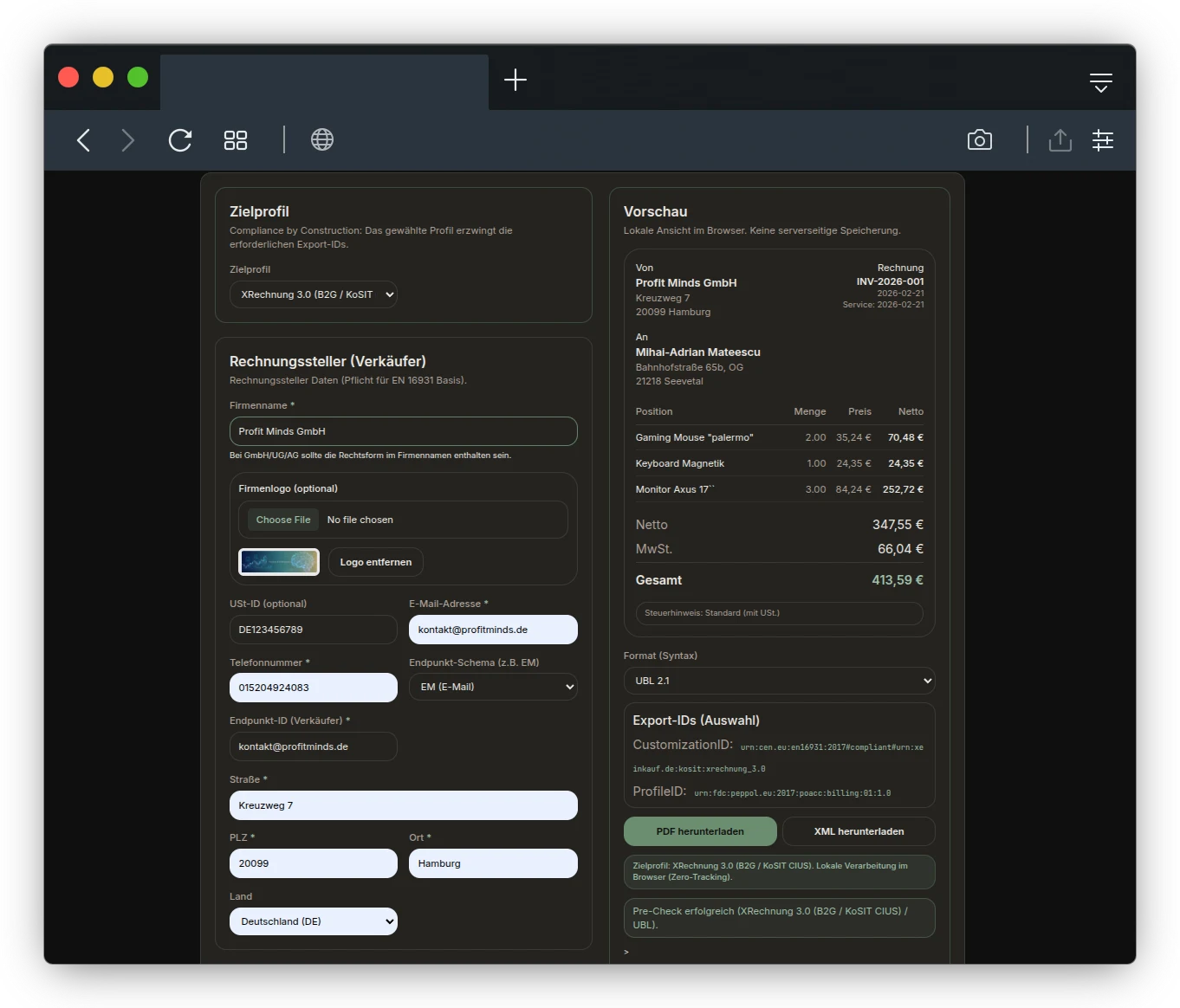
Building a KoSIT-Valid XRechnung Generator That Runs Entirely in the Browser
How I built a local-first, zero-tracking XRechnung 3.0 tool for DACH founders — compliant with EN 16931 and KoSIT v3.0, with no backend, no database, and no vendor lock-in.
Exploring the intersection of finance, AI/ML, and software engineering. 8 articles and counting.
How I built a local-first, zero-tracking XRechnung 3.0 tool for DACH founders — compliant with EN 16931 and KoSIT v3.0, with no backend, no database, and no vendor lock-in.
A research-driven exploration of how ML can augment accounting — from invoice intelligence to anomaly screening — with governance, explainability, and audit-ready design.
An in-depth guide to ML in German accounting — document AI, anomaly detection, forecasting, and GoBD compliance with reproducible, audit-ready examples.
Most founders fail not from lack of ideas, but from a mismatch between their profile and their business model. Here is how I built a tool to address that.
How I built a local-first, zero-tracking XRechnung 3.0 tool for DACH founders — compliant with EN 16931 and KoSIT v3.0, with no backend, no database, and no vendor lock-in.
A technical deep dive into extracting perfectly typed JSON data from unstructured HR text using OpenAI Structured Outputs, Zod, and Astro to flip the script on recruitment.
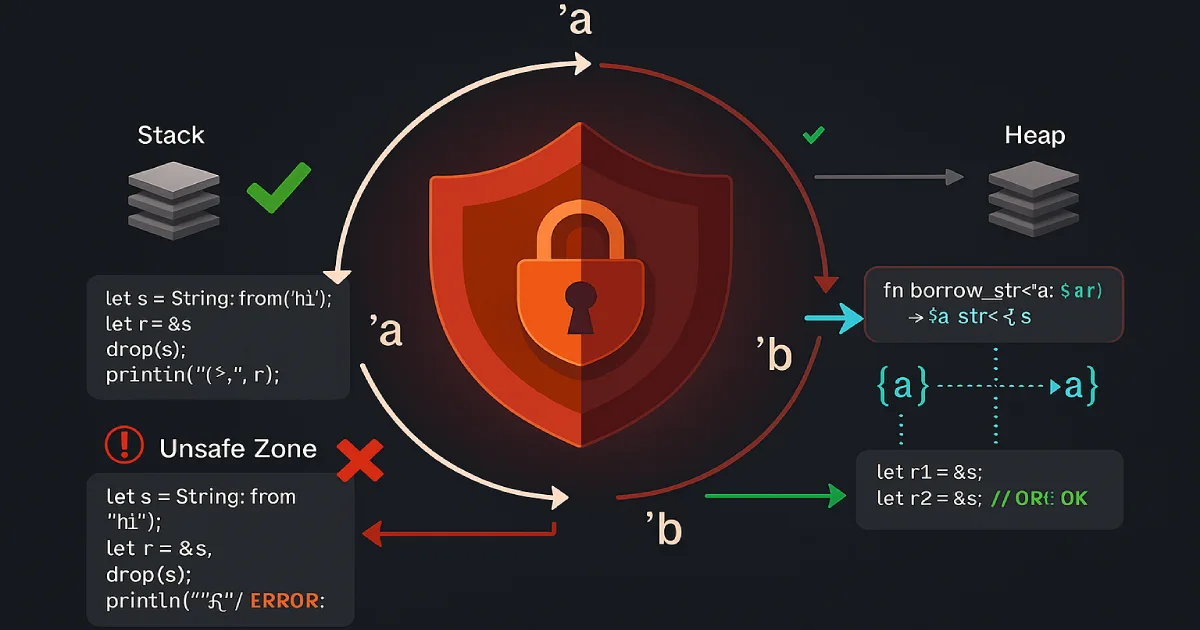
A research-driven guide to Rust's lifetime system—clear intuition, compiling examples, and safe alternatives when ownership gets tricky.
A research-focused breakdown of a performant and maintainable portfolio tech stack, exploring modern frontend patterns, performance strategies, and type-safe development workflows.
A research-driven exploration of how ML can augment accounting — from invoice intelligence to anomaly screening — with governance, explainability, and audit-ready design.
An in-depth guide to ML in German accounting — document AI, anomaly detection, forecasting, and GoBD compliance with reproducible, audit-ready examples.
A research-driven guide to writing fast, safe, and reproducible Julia code—type stability, allocations, dispatch, and disciplined benchmarking.